By September 2025, the completion of months of planning, community engagement, and construction marked a new chapter for child pedestrian safety in Bouaké, Côte d’Ivoire.
Bouaké, Côte d’Ivoire’s second-largest city after Abidjan with nearly a million inhabitants, is a rapidly growing urban center. Rising traffic volumes, especially motorcycles, make safe infrastructure more urgent than ever. Across Africa, road traffic injuries are the leading cause of death among children and young people aged 5–29, and in Bouaké this reality is stark: children walking to school face hazardous routes marked by speeding vehicles, scarce pedestrian infrastructure, and unsafe crossings.
Four primary schools across Bouaké, with a combined student population of more than 5,700, now benefit from safer environments to learn and grow, thanks to targeted infrastructure improvements carried out under the Safe Schools Africa program, funded by the Agence Française de Développement (AFD) and the FIA Foundation and as part of the Sustainable Urban Mobility Plan (SUMP) for the city of Bouaké.
This work, led by Amend in close collaboration with the Urban Mobility Department of the City of Bouaké, the Organisation of Young Ivorians for Road Safety (OJISER), the national Road Safety Organisation in Ivory Coast (OSER) and the Research and Development Institute (IRD), marks the completion of the second phase of Safe Schools Africa in Bouaké. Building on earlier interventions at N’gattakro and Koko 1 & 2 primary schools, the new works extend life-saving changes to additional high-risk school zones, demonstrating the power of partnerships to protect children in Africa’s rapidly growing cities.
Preschool and Primary Education Inspector (IEPP N’Gattakro), Korotoum Karamoko said: “Before this project, I witnessed the suffering caused by the dangers to which children were exposed every day, as my office is right across from the Ville Nord school. It was so dangerous that the Ville Nord school group, under my supervision, despite having seven schools, was losing students. There were only 877 students in total, half as many as other schools of the same size. Parents on the other side of the road preferred to send their children to a crowded school rather than this one because of the speed of the vehicles. Thank you, because next year will be different and the school will be able to revive.”
The Safe Schools Africa program adapts and scales the award-winning School Area Road Safety Assessments and Improvements (SARSAI) model, first developed by Amend with FIA Foundation support. SARSAI has been rigorously evaluated, with studies showing a significant reduction in child road traffic injuries and deaths – along with a lessening of the severity of injuries that do occur – where the model is implemented.
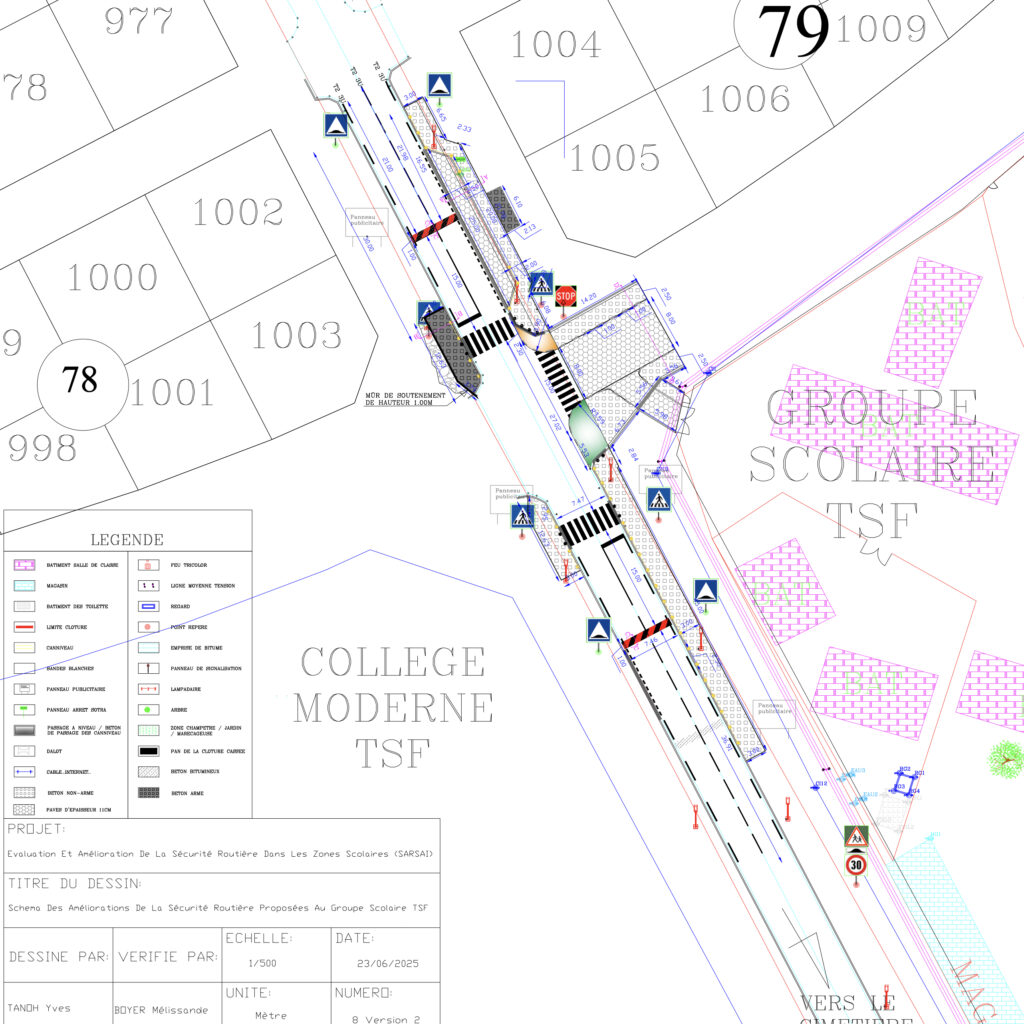
At its core, the approach is people-centered: slowing vehicles where children and cars intersect, separating children from traffic with safe pathways, and ensuring schools have safe, clearly marked entrances. These improvements, simple yet transformative, are now reaching Bouaké on a greater scale. Between January and August 2025, Amend and partners designed and implemented infrastructure works in the vicinity of four schools selected in collaboration with the local partners for their high-risk profiles. The changes were informed by injury data (in partnership with the French National Research Institute for Sustainable Development – IRD), on-site assessments, and consultations with school communities, including teachers, children, street vendors, parents, and city officials.
The following outlines each school’s student population and reported road traffic injuries, along with the safety measures put in place:
- EPP Ville Nord (877 students): 5 reported child road traffic injuries in 2024.
Measures implemented: 4 speed humps, 2 zebra crossings, 2 sections of footpath along the school wall and opposite side, restoration of portions of the school walls, a new and wider school gate, and signage. - Groupe Scolaire Aboliba (1,533 students): 5 reported injuries in 2024 (including 2 in November 2024).
Measures implemented: 3 speed humps, 2 zebra crossings (including 1 raised), extended footpaths, and signage. - Groupe Scolaire Annexe (1,527 students): 4 reported injuries in 2024.
Measures implemented: 4 speed humps, 3 zebra crossings, new footpaths, modification of a portion of the school wall to widen the footpath, and signage. - Groupe Scolaire TSF Bassa (1,862 students): 6–7 injuries per year, with 1 already reported in February 2025
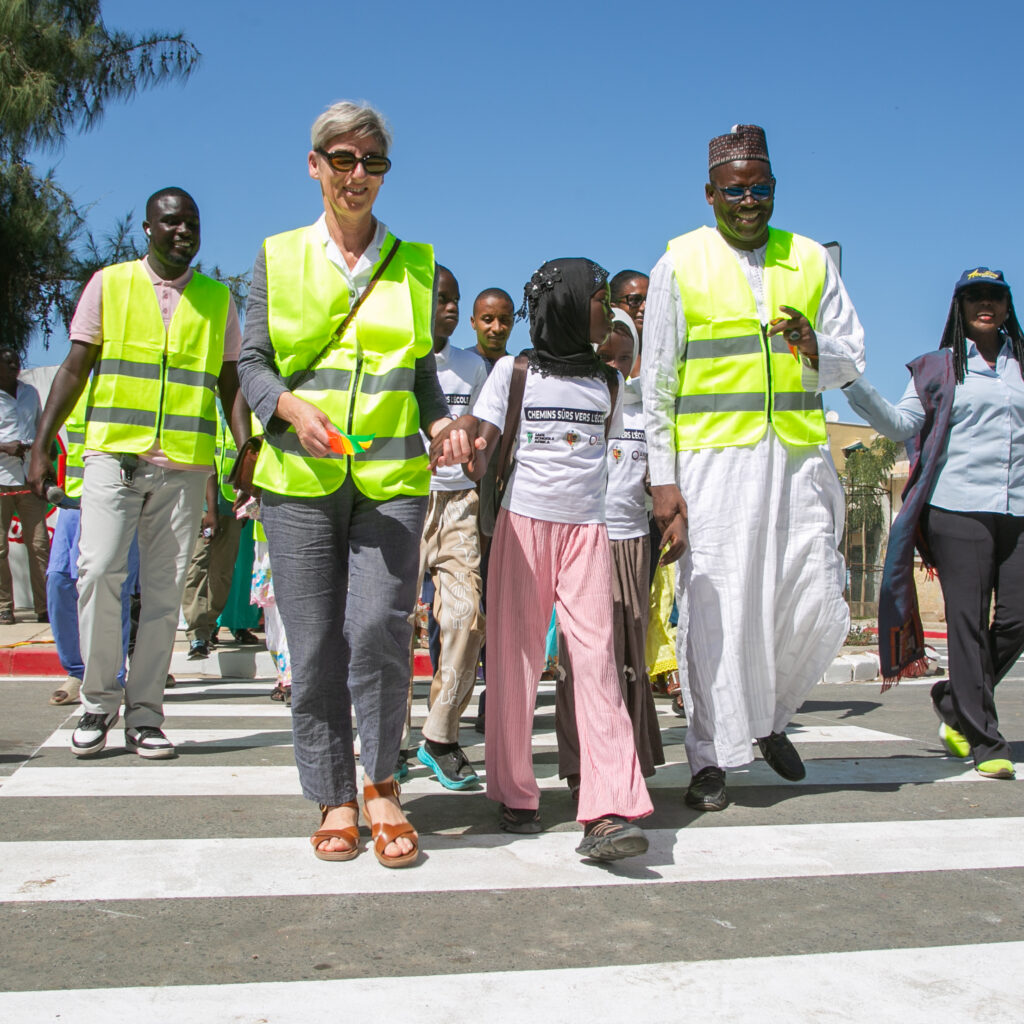
New measures: 2 speed humps, 2 zebra crossings, new portions of footpaths along the school wall and opposite side, safety platforms on each side of the crossings, a new bus stop, and signage.
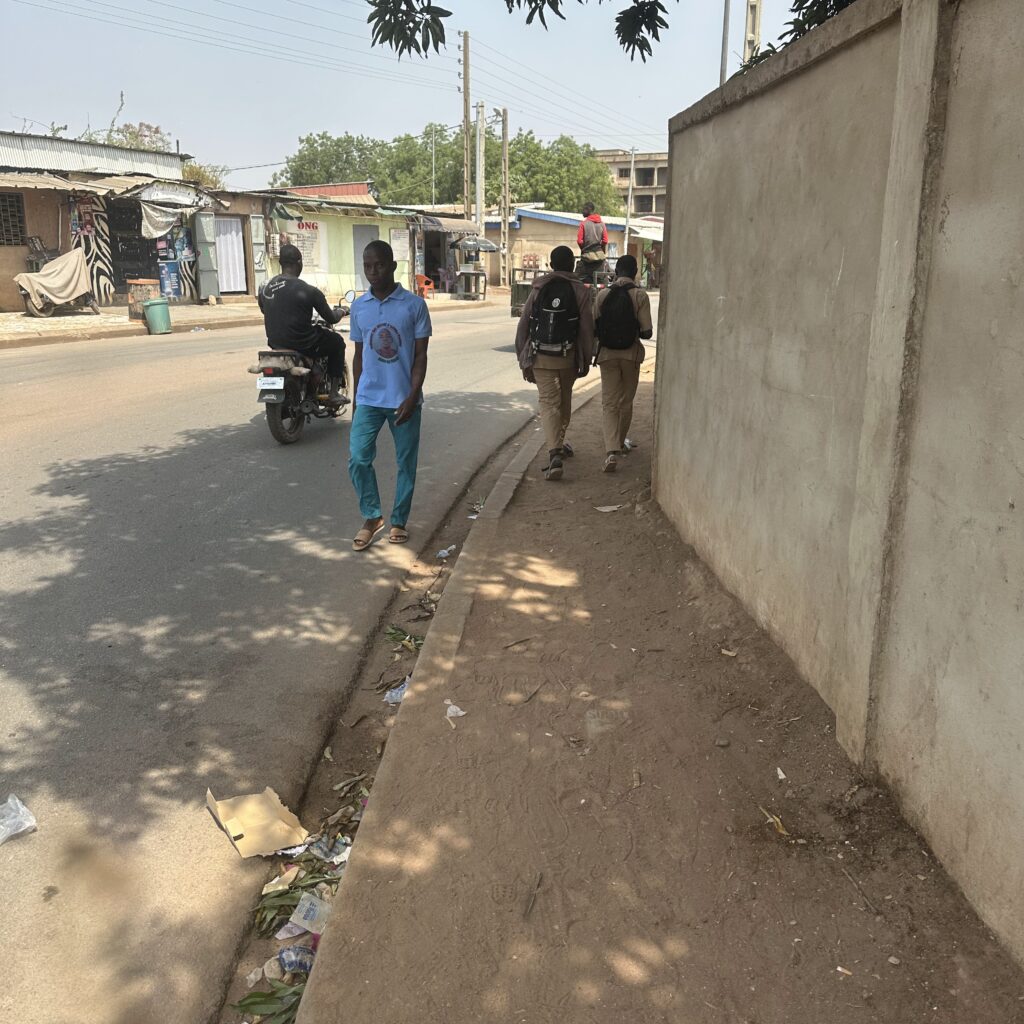
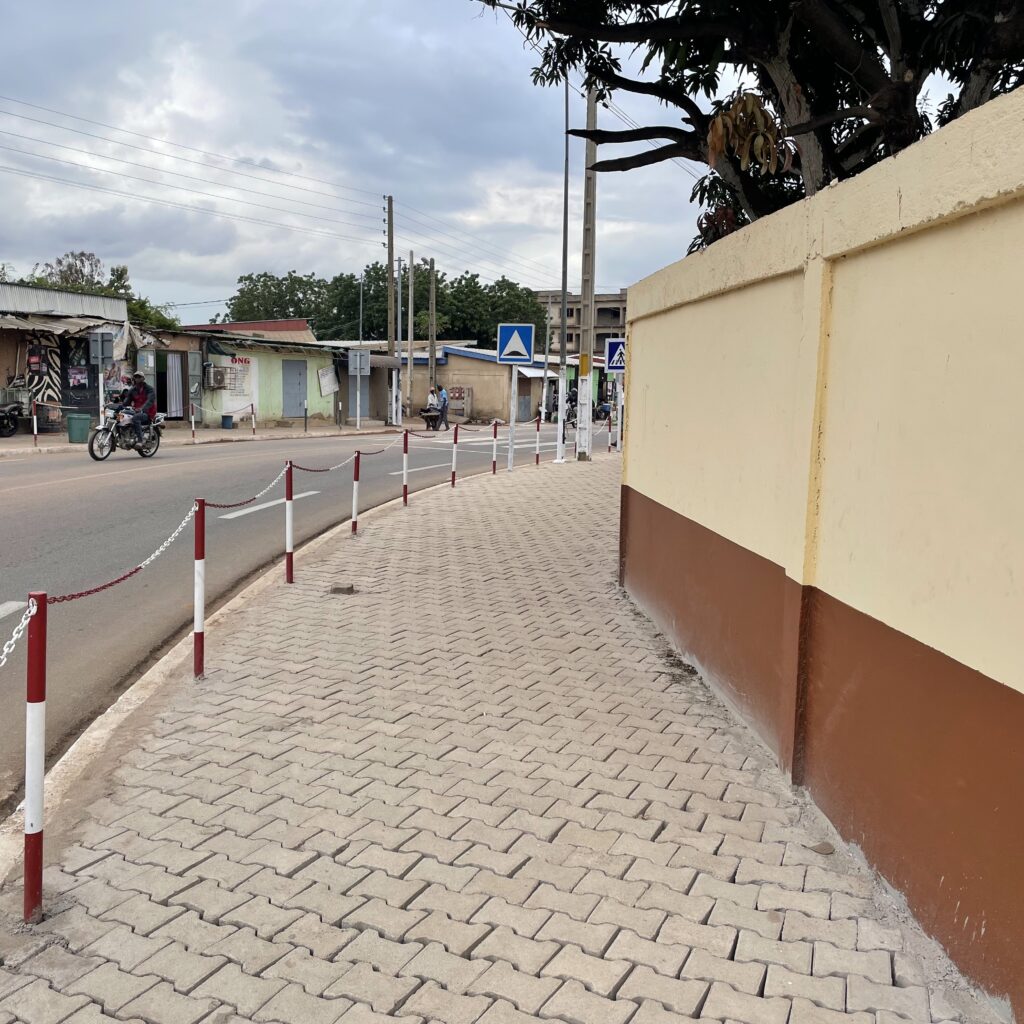
Together, these interventions will dramatically reduce the risks faced by more than 5,700 children and by the wider communities that use these roads every day.
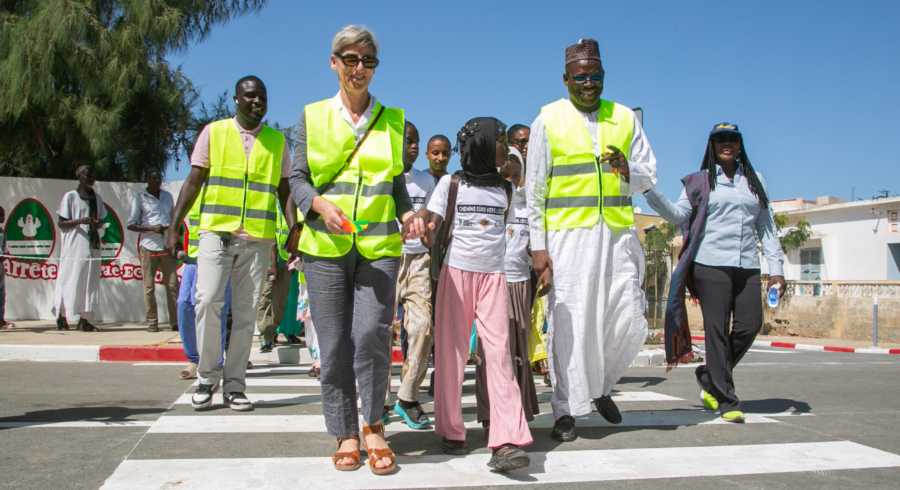
The difference these improvements make is visible and immediate. Before-and-after engineering drawings and photographs from the schools show once-dangerous entrances now protected by clear crossings and slowed traffic; paths that children once shared with vehicles are now safely separated.
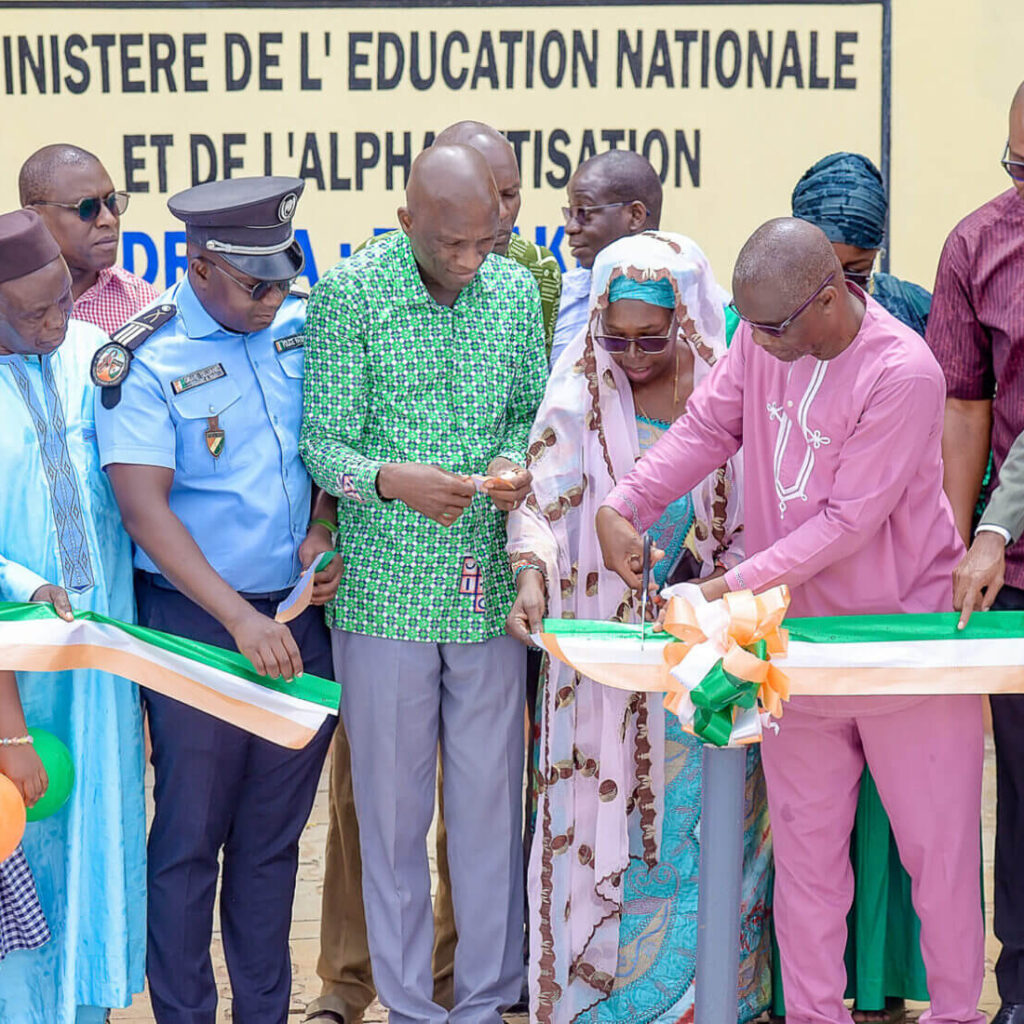
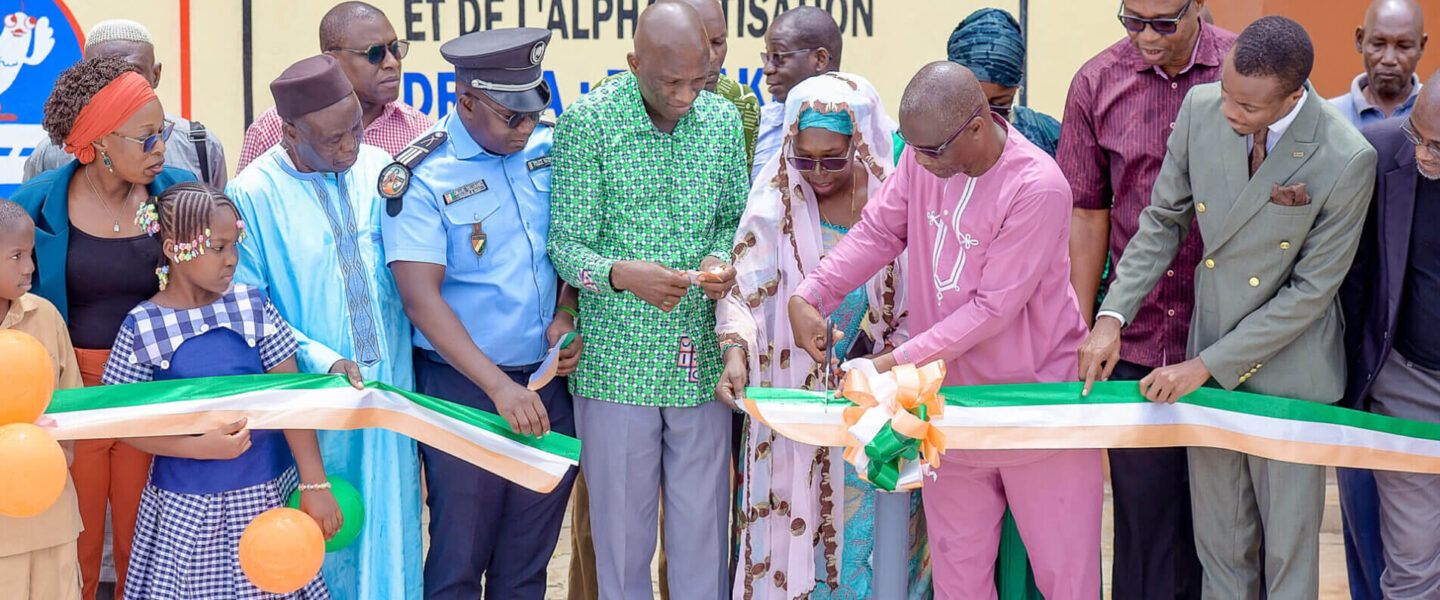
Abdramane Yéo, a fifth-grade student, spoke on behalf of the students during the ribbon-cutting ceremony. “Before, my classmates and I risked our lives crossing the road. Now we feel much safer.”
This most recent work in Bouaké is not an endpoint. It is a demonstration of what is possible when governments, communities, and international partners collaborate, and it lays the foundation for future projects. Lessons from these interventions are already informing discussions on larger infrastructure initiatives co-financed by AFD and the European Union, and are contributing to broader urban and mobility planning in cities.
Amend will keep scaling these proven interventions, making school journeys safer for children across Côte d’Ivoire and across Africa.